


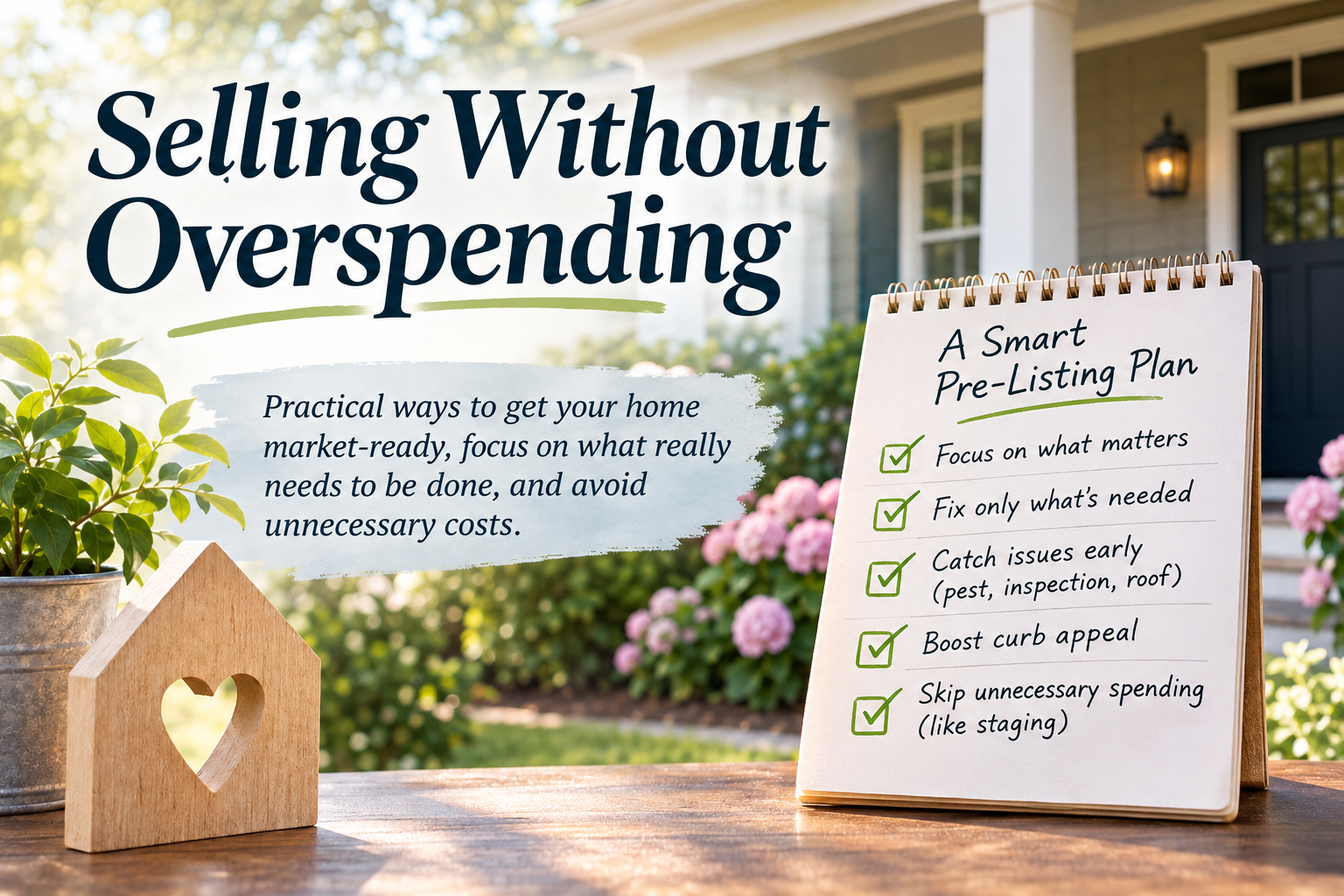
You don't have to spend a fortune to sell a home you're ready to leave. When I sit down with downsizers and longtime homeowners, two worries come up again and again: money and stuff. They worry about getting as much as possible from the sale, and they dread pouring money into a house they're about to leave.
I understand both. Most of my sellers don't want to do a lot of work on the home, mostly because they don't want to pay for it. My promise to them is simple: we'll prepare the home to get it on the market and get you as much as possible, and I'll tell you honestly what really needs to be done and what doesn't.
Your home doesn't have to look like every other listing
A lot of the advice out there tells sellers to make their home look exactly like every other home on the market. I take a different approach. I focus on what really needs to be done, and I let my sellers skip spending that I don't think has to be spent, especially when it's something a buyer will ultimately want to fix on their own anyway.
That matters most when the home has been well cared for and loved for many years. A custom home you've lived in for a decade or two already has its own character. The goal isn't to erase it. The goal is to get it market-ready without spending money you'll never see again.
How I decide what to fix and what to skip
Before we spend a dollar, we walk through the home together and sort everything into two piles: what is really needed and what isn't. A few examples of how that plays out:
- One room, not the whole house. If a single room is in really poor condition, we paint that room. We don't repaint the entire house.
- Remove what's in the way. Something like a stair lift may need to come out so buyers can picture themselves in the home.
- Leave the rest for the buyer. If it's something a buyer will likely want to change on their own, it usually isn't worth your money.
I also draw on my background in accounting and finance to put numbers on the decision. I prepare market analyses and what-if scenarios, so you can see what a repair or update could realistically do for your bottom line before you commit to it.
What is worth doing before you list
Spending less doesn't mean spending on nothing. A few inexpensive steps help me spot surprises early, so they don't derail a contract later. I work with a trusted team I've either used personally or that other agents in my office have recommended:
- Pest control to catch and address issues before a buyer's inspector does.
- A pre-inspection, when it makes sense, so we know what an inspector is likely to find.
- A roof inspection, so we know whether to expect problems there.
- Landscaping help to bring the outside of the home into good condition and make a strong first impression.
Because I rarely find outside staging necessary, that is one more cost my sellers usually avoid.
And what about all the stuff?
For many of my sellers, the biggest weight isn't the house. It's everything inside it. Decades of belongings can feel impossible to sort through, and I never ask anyone to tackle it alone.
Depending on the situation, I can help arrange an estate sale and set up a few interviews so you can choose the company you're comfortable with. Or I can bring in a buyout professional who clears out the home and sells what they take as part of the cleanout. Either way, you have a clear plan instead of an overwhelming project.
In my experience, something shifts once the house is empty and on the market. Most of my sellers begin to feel a lot better at that point.
Let's talk before you spend a dollar
If you're thinking about selling and you're worried about what it will cost to get your home ready, call me first. We'll walk through the house together, decide what really needs to be done, and make a plan that protects your money and your peace of mind.
I'd be honored to help you through this next chapter, one practical step at a time.
Holly Swan | Real estate agent, Lake Murray and Columbia, SC
www.hollyswanrealestate.com
[Your phone] | [Your email]